Trying to decide between a townhome and a single-family home in Coppell? You are not alone. Each option offers a different mix of cost, maintenance, privacy, and long-term value. In this guide, you will learn the key differences, the local Coppell factors that matter, and a simple process to compare two homes side by side. Let’s dive in.
Townhome vs single-family basics
Choosing the right property type starts with how each one is built and owned.
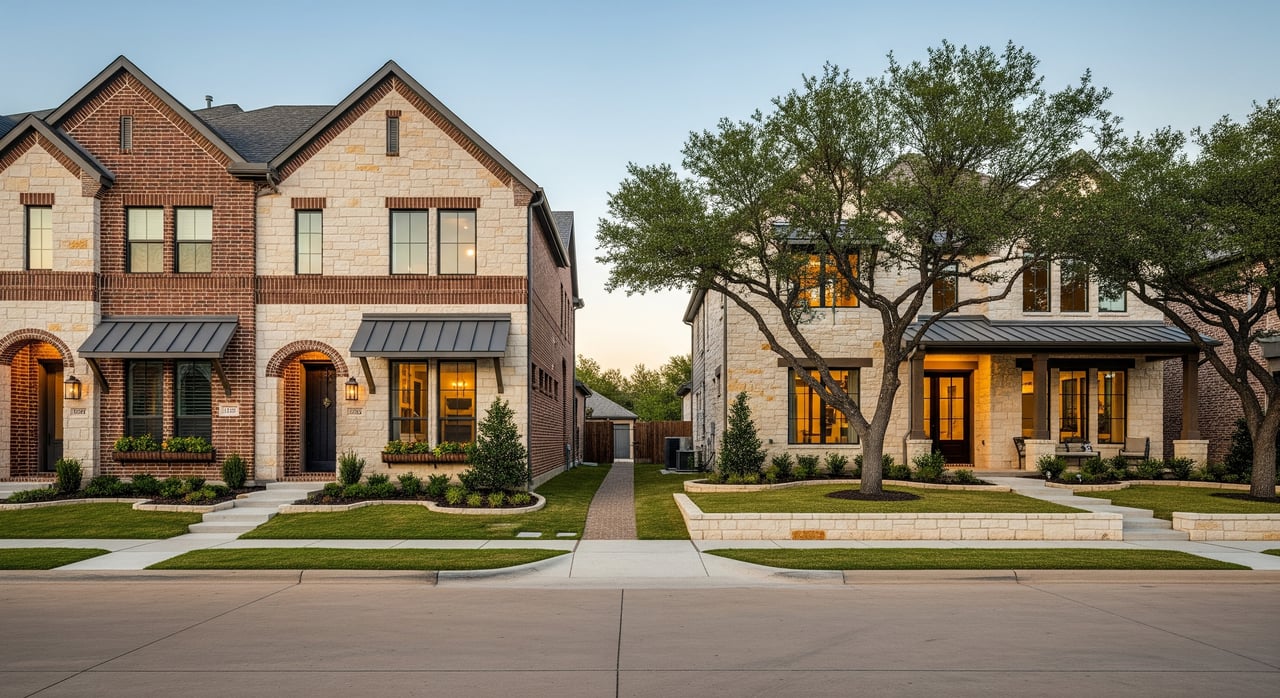
- Townhome: Attached units that share at least one wall. Ownership can be fee-simple or condominium-style, and most communities have an HOA. Expect smaller lots, vertical layouts, and lower exterior upkeep handled through the association.
- Single-family detached: A stand-alone home on a private lot with no shared walls. You control the exterior and yard. Some neighborhoods have HOAs; others do not.
Here is a quick comparison:
| Feature | Townhome | Single-family |
|---|---|---|
| Ownership | Fee-simple or condo; HOA common | Fee-simple; HOA varies |
| Maintenance | HOA often covers exterior/landscaping | Owner handles exterior and yard |
| Outdoor space | Limited private space; shared areas common | Private yard and more separation |
| Privacy | Shared walls | No shared walls |
| Insurance | Often interior policy (HO-6) if condo; HOA master policy covers exterior | Full homeowner policy (HO-3) |
| Financing | Condo-style may require project approval for some loans | Standard single-family underwriting |
| Monthly costs | HOA dues + utilities + insurance | No or low HOA; higher individual maintenance |
Cost factors to compare
Your total cost of ownership in Coppell is more than the purchase price. It includes HOA dues, maintenance, property taxes, insurance, and utilities.
- Purchase price and price per square foot: Townhomes often have a lower entry price because they are smaller, though price per square foot can be higher than detached homes. Use current MLS data to compare recent medians by property type within Coppell.
- HOA dues vs maintenance: Townhome dues usually cover common area care and sometimes exterior maintenance, roof, and insurance. For detached homes, you shoulder lawn care, exterior repairs, and replacements yourself. A common rule of thumb is to set aside about 1–3% of the home’s value annually for maintenance, adjusted for age and complexity.
- Property taxes: Texas has no state income tax, so effective property tax rates are comparatively high. Coppell homeowners pay city, county, and school district taxes. The rate applies to assessed value, so your total bill will track with the home’s price and exemptions rather than the structure type. Verify details through local appraisal and tax offices.
- Insurance: In condo-style townhomes, the HOA master policy often covers the exterior, so you may carry an interior HO-6 policy and loss assessment coverage. Detached homes typically rely on a full HO-3 policy. Insurance needs and premiums vary by location, age, and risk profile.
- Utilities and operating costs: Smaller townhomes can have lower total utility usage, though vertical layouts and insulation can affect efficiency. Some townhome HOAs include water or trash; check each community’s inclusions.
Financing and HOA rules
Financing can differ based on the legal structure of a townhome.
- Condo and project approval: If a townhome is part of a condominium regime, certain loans such as FHA or VA may require the project to be approved. Fee-simple townhomes are typically treated more like single-family homes for lending.
- Down payment and loan limits: Lower total prices on townhomes can reduce the nominal down payment needed. That can help first-time buyers enter Coppell at a comfortable payment level.
- Rental and use restrictions: HOA covenants often regulate leasing, exterior changes, and parking. Some communities include rental caps or minimum lease terms. Review the CC&Rs and budget before you buy, especially if you plan to rent the property.
- Insurance coordination: Understand what the HOA’s master policy covers and what falls to you. If you are buying a detached home, request quotes for a homeowner policy and, where relevant, flood insurance based on the property’s location.
Coppell factors to weigh
Local context can tilt the balance between a townhome and a single-family home.
- School zoning: Many Coppell buyers prioritize access to Coppell ISD campuses. Verify attendance zones and review official school reports from state education authorities when comparing addresses.
- Commute and location: Coppell sits between Dallas, Plano, and Irving, with convenient access to major corridors and DFW Airport. Townhomes often cluster near retail and arterial roads that serve commuters, while detached homes are common within interior neighborhoods. Test your drive during your typical commute time.
- Airport proximity and noise: DFW Airport’s flight paths and noise contours vary across Coppell. If noise is a consideration, evaluate specific blocks and visit at different times of day to gauge your comfort.
- Flood risk and drainage: Coppell includes creeks and drainage basins. Flood risk can vary dramatically street by street. Review FEMA and city floodplain information and obtain insurance quotes where indicated by maps and lender requirements.
- Zoning and new development: The city’s history favors lower-density single-family neighborhoods, but recent infill can add attached options near commercial corridors. Track approved and proposed developments through city planning updates when making a long-term decision.
- HOA prevalence: Many newer subdivisions and infill projects have active HOAs. Expect architectural rules, exterior standards, and community guidelines that can affect your use and future resale.
Who each option fits
There is no one-size-fits-all choice. Start with your lifestyle and time horizon.
- Townhome fit: A good match if you want lower exterior upkeep, a more attainable entry price, or a lock-and-leave lifestyle. This can also work if you prefer being close to corridors and retail or want community amenities without maintaining them yourself.
- Single-family fit: A strong option if you value outdoor space, privacy, and the flexibility to modify exteriors. This can suit buyers with pets, outdoor hobbies, or plans for longer-term ownership where yard and expansion potential matter.
Selling strategy by property type
Your marketing and pricing strategy should align with how buyers shop in Coppell.
- Positioning: For townhomes, emphasize low maintenance, HOA-covered items, amenities, and nearby corridors that support an easy commute. For detached homes, highlight lot size, outdoor living, interior updates, and proximity to major employment centers.
- Pricing and demand: Detached homes typically draw a wider buyer pool in suburban markets, which can support steady demand. Townhomes appeal to buyers focused on affordability and convenience. Track days on market and sale-to-list ratios by property type to guide your strategy.
- Preparation: For townhomes, ensure HOA documents are current and fees and coverage are clear. For detached homes, invest in curb appeal, exterior touch-ups, and yard presentation to maximize first impressions.
Side-by-side checklist
Use this list to compare a specific townhome and a specific single-family home in Coppell.
- Confirm the ownership type: fee-simple versus condo-style townhome; review the declaration if applicable.
- Review HOA details: monthly dues, master policy coverage, reserves, pending assessments, rental rules, parking, and architectural controls.
- Total monthly cost: mortgage, taxes, insurance, HOA dues if any, and estimated maintenance.
- Property tax review: check the current assessed value, tax entities, exemptions, and appeal timelines.
- Insurance quotes: HO-6 or HO-3 as appropriate, plus flood if indicated by maps.
- Utility expectations: ask for recent bills and note any HOA-included services.
- Flood and noise exposure: evaluate FEMA and local floodplain data and proximity to DFW flight paths.
- Commute test: drive your route during typical peak times.
- Outdoor and privacy needs: yard size, shared walls, and fencing options.
- Resale indicators: neighborhood supply, days on market, and buyer pool for that property type.
Next steps for you
If you are weighing a Coppell townhome against a single-family home, your best move is to compare real, recent local data and your total cost of ownership. A neighborhood-savvy agent can pull MLS medians by property type, share HOA document insights, and prepare a side-by-side worksheet so you can choose with confidence.
If you want that level of guidance, let’s get a coffee and talk through your options. Connect with Hunter Realty Group to schedule a friendly consultation and a custom Coppell comparison.
FAQs
Are townhomes cheaper than single-family homes in Coppell?
- Often the total purchase price is lower for townhomes, though price per square foot can be higher; confirm with up-to-date MLS medians by property type in Coppell.
Do FHA or VA loans work for Coppell townhomes?
- Yes, but if the townhome is a condominium, the project may need FHA or VA approval; fee-simple townhomes are typically treated like detached homes for underwriting.
How do property taxes compare for Coppell townhomes vs single-family?
- The same local tax rates apply based on assessed value and taxing entities, so the total bill depends more on price and exemptions than the property type.
What HOA rules should I expect in a Coppell townhome community?
- Rules often include rental caps or minimum lease terms, exterior and architectural standards, and parking guidelines; always review the CC&Rs, budget, and reserves.
Is airport noise a concern when buying in Coppell?
- Some areas sit under flight paths from DFW Airport; review airport noise contour information and visit the property at different times to gauge your comfort.
Which option holds value better in Coppell?
- Detached homes often attract a broader buyer pool in suburban markets, supporting steady demand; results vary by location, condition, and supply, so review local trends by property type.