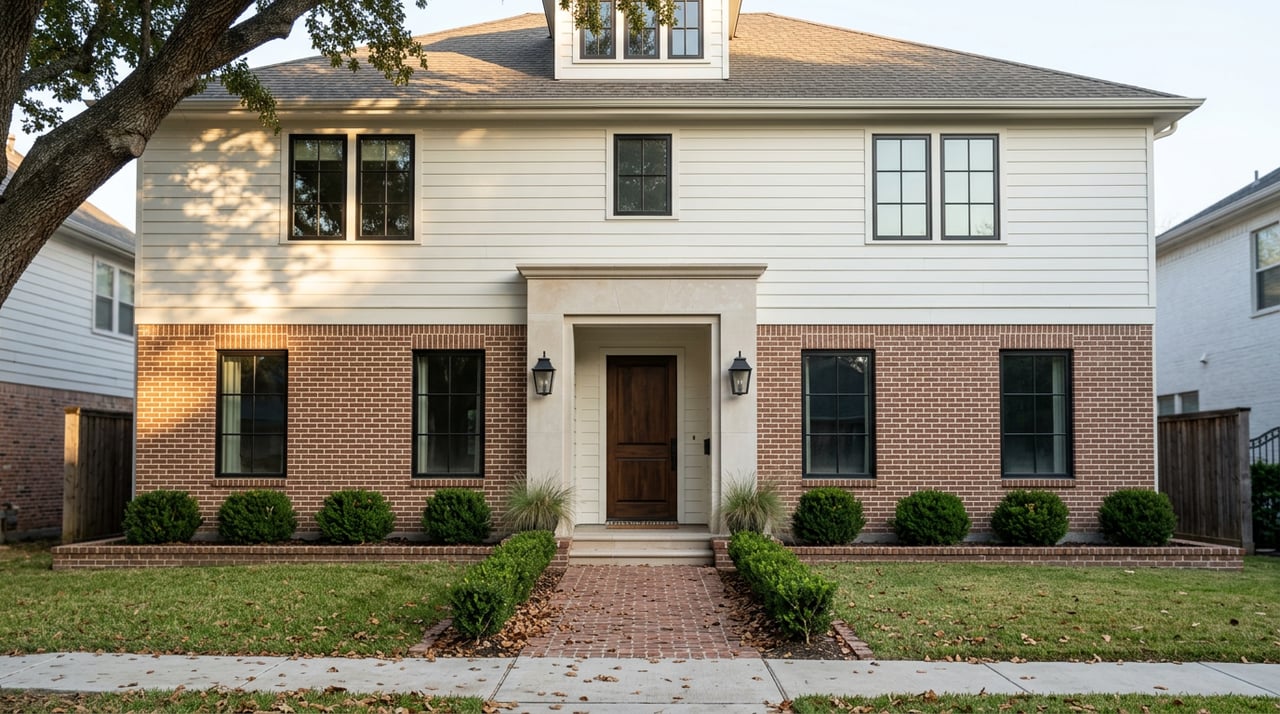
A buyer under contract on a University Park cottage near Snider Plaza calls her contractor with a simple ask: pull out the old kitchen, open up the back wall, maybe take down a load-bearing beam for a better sightline to the yard. Three weeks later the contractor calls back with a different conversation. The scope of work now touches enough of the exterior walls, foundation, and roof that the city no longer classifies it as a remodel. It is a teardown. Every code requirement that applies to new construction now applies to her project, on her timeline, at her cost.
That moment, more than any school ranking, is what separates buying in University Park from buying in neighboring Highland Park. Both cities sit inside the same school district. Both get grouped together as "the Park Cities" in almost every conversation about Dallas real estate. But the question worth asking before you write an offer isn't which side of Mockingbird Lane has better schools. It's what you're actually purchasing when the price per square foot climbs past $700.
The Schools Aren't the Story
University Park and Highland Park share Highland Park Independent School District entirely. There is no separate zoning advantage to chase, no elementary school boundary that favors one city's home prices over the other's. Even the geography plays a trick on people: Highland Park High School, despite its name, sits on Emerson Avenue inside University Park's city limits, not Highland Park's. Out-of-town buyers are routinely surprised by this when they assume each city's institutions stay neatly on its own side of the line.
If schools were the differentiator, prices and pace would track evenly across both cities. They don't. University Park homes have been trading above $700 per square foot through the middle of 2026, with average sale prices running near $3 million. Over the three months ending in May 2026, prices ran about 4.5 percent ahead of the same period a year earlier, and homes were selling in roughly 23 days on average, down from 41 days the year before. That's a market moving almost twice as fast as it was twelve months earlier, in a city with the identical school district as its neighbor. Something other than HPISD is setting the pace.
The Formula That Actually Sets the Price
That something is written into University Park's own building code. The city's Community Development Department uses a specific formula to decide whether a renovation is legally a remodel or a full teardown: it weighs exterior wall demolition at 50 percent of the calculation, foundation at 25 percent, and roof at 25 percent. If that weighted total crosses more than 50 percent of the structure, the whole property must be rebuilt to current City building and zoning codes, not just the portion under renovation.
That formula is not a technicality. It is the mechanism that determines what a buyer is actually pricing when they bid on an older University Park home near SMU or the Preston Hollow line. A 1920s or 1930s structure that looks renovation-ready on a walkthrough can cross that threshold the moment a contractor starts opening walls, and once it does, the seller's asking price stops being about the house and starts being about the dirt underneath it.
This is the piece that gets lost when buyers compare University Park to Highland Park on price alone. University Park's housing stock runs older and narrower on average, with original 1920s-through-1940s construction standing next to full rebuilds on the same block near campus. Every one of those older homes carries this same demolition math, whether or not the current owner has ever tested it.
What Changes Once You Cross the Line
Once a project is reclassified as new construction, University Park applies the same rules to it that apply to any ground-up build in the city. A few of those rules matter more than most to someone budgeting a renovation:
- New construction must include an automatic sprinkler system installed throughout the building, per the city's adopted fire code.
- An energy code compliance report is required on new construction, additions, and remodels, not an optional add-on late in the process.
- Construction work is prohibited on Sundays and on a set list of city holidays, which stretches out any project that assumed a seven-day work week.
None of this is disclosed on a listing sheet. It surfaces during due diligence, when a buyer's contractor pulls the actual scope of work against the city's threshold and finds out which side of the line the project falls on. For a buyer weighing a fixer-upper against a move-in-ready home in the same price range, that formula is often the real deciding factor, not the finish level of the kitchen.
What the Market Is Actually Pricing
Read the 2026 numbers again with the demolition formula in mind and the acceleration makes more sense. A market where days on market fell from 41 to 23 year over year isn't just a market with more buyers. It's a market where more of the inventory is being priced and purchased as land, with the existing structure treated as a placeholder rather than the asset. Buyers who understand the formula can move fast because they already know what they're bidding on. Buyers who don't find out mid-transaction, which is part of why well-positioned properties are moving off market so much quicker than they were a year ago.
The pace of civic spending backs this up. Public construction filings show a $14.9 million infrastructure project along the Snider Plaza corridor between Daniel Avenue and Westminster Avenue, part of the same investment stream that led the University Park City Council to approve a Snider Plaza Public Improvement District in May 2026, aimed at funding long-term upkeep of a retail strip that has anchored the city since it opened in 1927. None of that spending is about school quality. It is about land use, and it tells you where the money in this market is actually going.
Property Taxes Follow the Same Logic
The same land-first pricing shows up on the tax side. University Park's assessed values are set by the Dallas Central Appraisal District, which values property on a market basis and mails appraisal notices each year when a property's appraised amount changes, typically reaching mailboxes by the middle of May. Homeowners who occupy the property as their primary residence as of January 1 qualify for a homestead exemption equal to 20 percent of assessed value. In a city where the land under a home can be worth more than the structure sitting on it, that spring notice is often the first real signal of how much a lot's value has moved, independent of anything the owner did to the house itself.
For a seller deciding whether to list as-is or invest in updates first, this is the calculation that matters more than curb appeal. If a buyer's contractor is going to trip the demolition formula anyway, money spent preserving the existing structure may not follow the seller home at closing.
A Few Questions Buyers Ask Once They See the Math
Does the weighted demolition formula apply to additions, or only full renovations? It applies to the scope of demolition involved in the project, whether that demolition happens as part of a renovation, an addition, or a standalone teardown. The city weighs exterior walls, foundation, and roof in its calculation, not the stated purpose of the permit.
Can a buyer find out before closing whether a specific house is close to that threshold? The city's Community Development Department can review a proposed scope of work before a buyer commits to a contractor's plan, which is worth doing before finalizing a purchase built around a specific renovation.
Does this mean older homes in University Park are a bad investment? Not at all. It means the value of an older home depends heavily on what the buyer intends to do with it. A light cosmetic update behaves very differently, financially and procedurally, than a full reconfiguration of the floor plan.
If you're comparing University Park to Highland Park, or trying to figure out what a specific lot is actually worth once you factor in what you can and can't preserve, that's exactly the conversation we have over coffee. Hunter Realty Group has spent 25 years in these blocks, and we'd rather walk you through the demolition math before you write an offer than after your contractor calls with the news. Let's Get a Coffee and talk through what a specific University Park or Highland Park address is really pricing.